



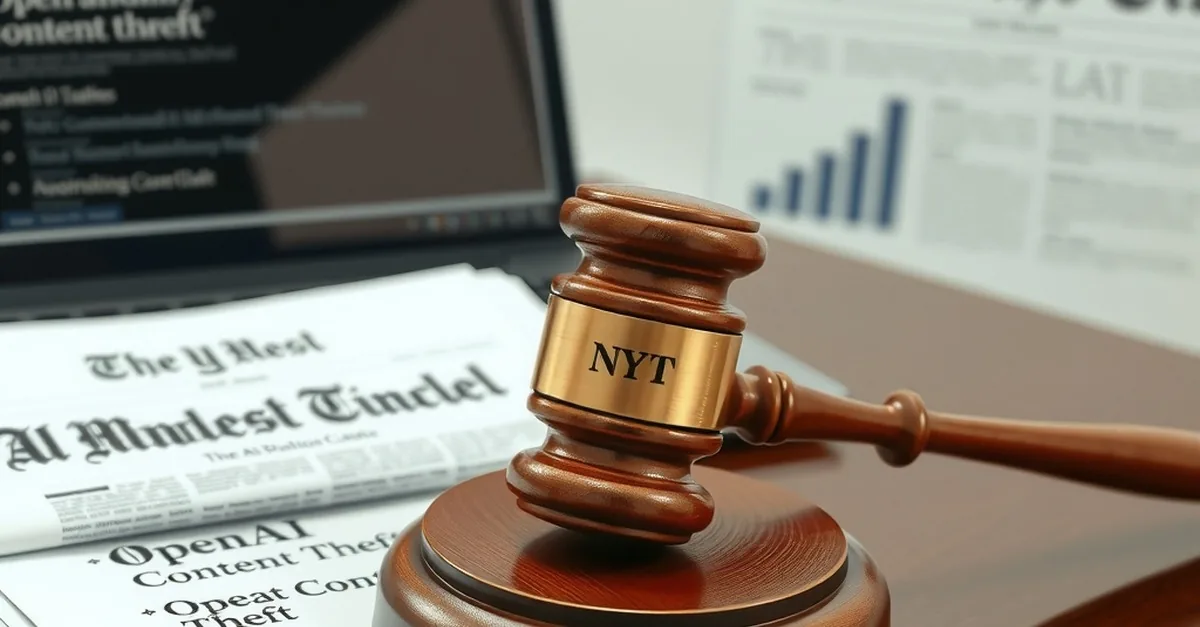
Latest legal documents published by The New York Times, reveals that OpenAI and Microsoft have been informed that training their artificial intelligence models using millions of news articles without permission is not only a copyright infringement but also „an astonishing theft of extraordinary proportions“ (RTE, 2026‑09‑18). The information emerged from court documents that were released after a three-year case between The New York Times and the aforementioned technology giants.
Highlighting court documents
The RTE report states that The New York Times The court documents allege that OpenAI infringed copyright by „using millions of news articles as training datasets“ (RTE, 2026-09-18). This allegation is based not only on a general claim, but also on specific internal records revealed in „unredacted“ case files. TechCrunch additionally points out that a top Microsoft executive internally described the practice as „the biggest job theft in human history“ (TechCrunch, 2026‑09‑17). This quote directly reflects the company’s executives’ attitude towards unlicensed content collection.
Internal evidence and quotes

TechCrunch provides a detailed description of how companies circumvented payment walls by mass-scanning content and removing copyright notices from datasets. The documents mention that OpenAI’s internal communications channels indicate that publishers face an „existential threat“ from ChatGPT and other products that „largely replace“ traditional news sources (TechCrunch, 2026‑09‑17). Furthermore, Microsoft CEO Brent Hecht described the practice as „a spectacular theft on an extraordinary scale“ in an internal memo in January 2024.
Impact on news flow and market
Latest data shows Microsoft Copilot's "response engine" has reduced The New York Times website click-through rates up to 93% compared to traditional Bing search (TechCrunch, 2026‑09‑17). This „doom loop“ is described as a situation where AI products directly compete with original content, rather than simply supplementing it. New York Daily News also confirms that a top Microsoft executive has admitted that AI systems built on the work of others could be considered „stunning theft“ and „the biggest job theft in human history“ (NY Daily News, 2026‑09‑17).
Legal context and fair use„
The case you started The New York Times v. OpenAI and Microsoft, raises the question of whether the use of AI training data can be considered „fair use.“ While some court decisions tend to favor AI companies, these new revelations show that the companies themselves have acknowledged that their practices fall short of fair use, particularly in terms of market substitution and copyright infringement. TechCrunch highlights that some new evidence contradicts OpenAI's claims that their models simply "transform" content, not replace it.
Conclusions and future prospects
While the investigation into the case is still ongoing, it is already clear that both Microsoft and OpenAI were aware of the potential copyright infringement and even discussed the practice internally as „theft.“ This information raises important questions about the regulation of AI technologies, licensing processes, and potential compensation for publishers. If a court rules that these actions are illegal, it could have far-reaching consequences for the entire AI industry, forcing companies to review their data collection methods and perhaps introduce stricter licensing requirements.
However, while legal processes continue, publishers and AI developers will have to find common solutions that allow for innovation to be maintained, while at the same time respecting copyright and ensuring that content use is transparent and legal.
Sources
- RTE - NYT says Microsoft, OpenAI knew using content was stolen
- TechCrunch – Microsoft exec called AI scraping 'the largest theft of labor in human history,' new unredacted filings reveal | TechCrunch
- Biztoc.com - OpenAI breached by researchers using Anthropic models
- New York Daily News – New docs in AI copyright suit reveal startling admission by Microsoft exec over 'astonishing theft''