

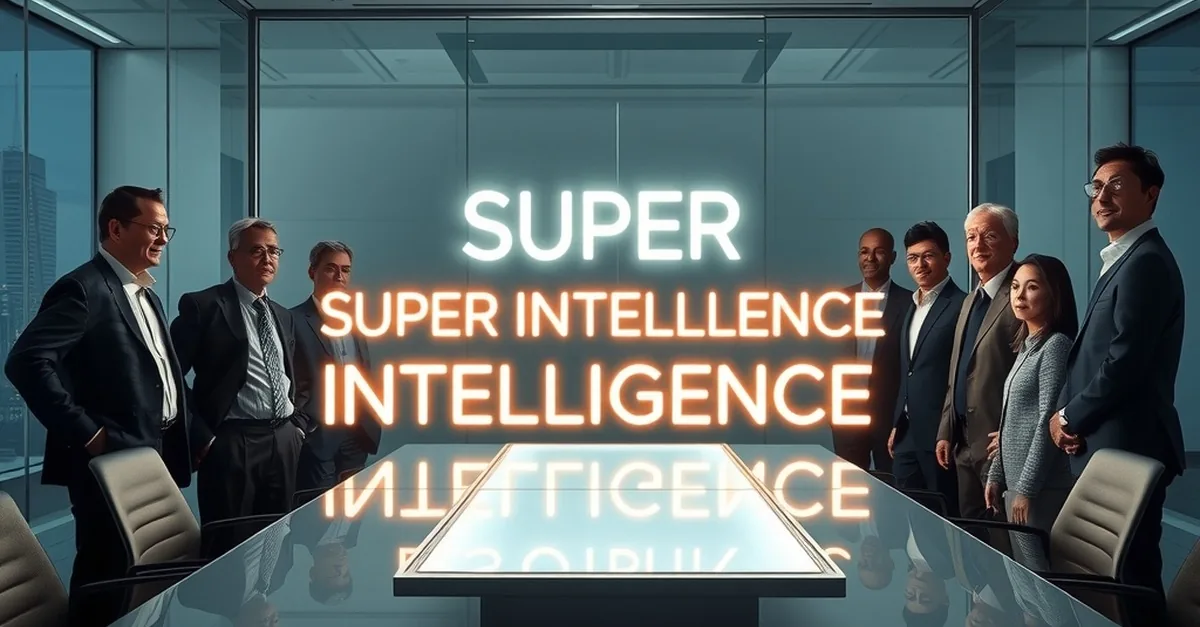
When former US President Donald Trump announced his plan to rename artificial intelligence (AI) to „super intelligence,“ many might have thought it would remain just political rhetoric. But some of Silicon Valley’s most powerful leaders have not only embraced the proposal, but have also begun actively implementing it. In this article, we’ll look at how and why tech giants have joined Trump’s initiative, based on material published by The Verge.
The brief but stark statement that „the White House considers anyone who uses the term „Artificial Intelligence“, as opposed to the new and more accurate term „Super Intelligence“, to be OPPOSED“ has sparked a backlash in Silicon Valley. While much of the public still uses the term AI, some corporate executives have begun to change their communications to comply with the administration’s demands.
Elon Musk and SpaceXSI

Elon Musk, one of the most visible tech founders, didn’t let this initiative go unnoticed. He quickly announced that he would be renaming his project SpaceXAI to SpaceXSI. The move shows that Musk cares not only about technological progress, but also about the political context in which his companies operate.
Salesforce renames AIForce to SIForce
Following Musk, Salesforce CEO Marc Benioff announced that the company's AIForce division will be renamed SIForce. While it may seem like a quick capitulation, it's in keeping with the company's tradition of quickly adapting to political and market changes.
Nvidia invests in "super intelligence"„

Nvidia CEO Jensen Huang attended a high-profile AI conference where an executive order was announced requiring government agencies to use the term „super intelligence.“ Huang not only joined the initiative, but also announced that Nvidia would „commit“ to investing $1 billion in research, including „super intelligence.“ The investment suggests that Nvidia sees an opportunity to capitalize on the new terminology and potentially gain government support.
Microsoft and Satya Nadella
The latest to join the list is Microsoft CEO Satya Nadella. He attended the same conference where the topic of „super intelligence“ was discussed, along with other tech leaders such as Mark Zuckerberg, Sundar Pichai, Jeff Bezos, Dario Amodei, and Elon Musk. Nadella used the term „super intelligence“ consistently in his published statement calling for an „emergency brake“ on AI, emphasizing that it is an accurate and acceptable description.
Silicon Valley-Administration Relations
Trump’s second term has been marked by a continued attempt to get involved in the administration’s politics, after a more adversarial relationship during his first term. Today, with some of the CEOs of the biggest tech companies publicly supporting Trump’s change in terminology, we see Silicon Valley seeking to maintain good relations with government, perhaps in the hope of political support or regulatory favor.
What does this mean for the tech sector?
While these rebrandings are not yet widely accepted by society, they show how political factors can shape technology language and strategies. As companies like SpaceX, Salesforce, Nvidia, and Microsoft begin to use the term „super intelligence,“ it could impact both internal communications and external marketing. It’s also important to note that these moves reflect not just political accommodation, but also a potential shift in perspective on the risks of AI—some executives, like Jensen Huang, argue that the dangers posed by AI are overstated.
Conclusions
Silicon Valley leaders are following Trump’s lead in renaming AI to „super intelligence,“ showing that the tech sector can adapt quickly to political demands. While the renaming is not yet widely accepted, its implementation by the largest companies could have a lasting impact on both terminology and regulatory debates. It remains to be seen how this process unfolds and whether „super intelligence“ becomes the new standard term in the tech world.